


By TN Ashok. New Delhi,
July 13, 2026
https://youtube.com/@theflagpost
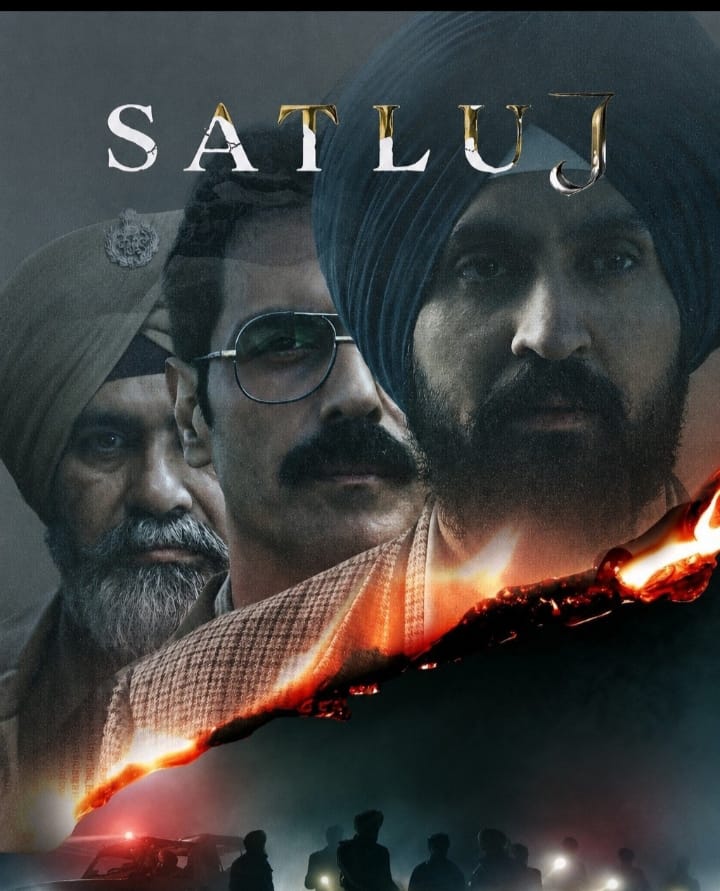
The controversy surrounding Satluj has entered a new phase, with the Union government reportedly referring the film to an Inter-Departmental Committee (IDC) under Section 69A of the Information Technology Act after directing streaming platform ZEE5 to remove it from its Indian catalogue barely 48 hours after its surprise release. The committee will now examine whether the film violates provisions of the Information Technology Rules before deciding its future.
The development has transformed what began as a censorship dispute into a national debate on free expression, historical memory and the limits of state intervention in cinema.
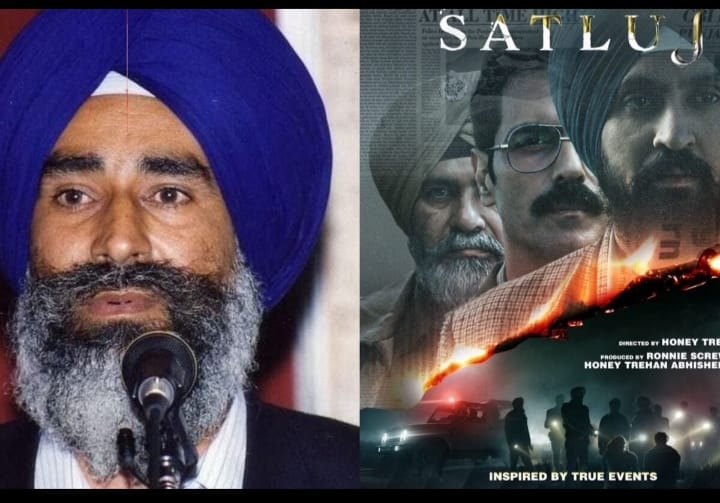
Directed by Honey Trehan and starring Diljit Dosanjh, Satluj is based on the life of human rights activist Jaswant Singh Khalra, whose investigations in the mid-1990s exposed allegations of illegal cremations of thousands of unidentified bodies during Punjab’s violent insurgency. Khalra himself was abducted and murdered in 1995, and several police personnel were later convicted in connection with his killing.
The film has had one of the longest and most tortuous journeys to release in recent Indian cinema. Completed in 2022 under the title Punjab ’95, it ran into immediate trouble with the Central Board of Film Certification (CBFC). According to Trehan, the Board demanded an astonishing 127 cuts before granting certification. The director refused, arguing that the suggested deletions would fundamentally alter the narrative and destroy the integrity of the film. The certification process remained deadlocked for nearly three years.
Unable to secure a theatrical release, the producers quietly adopted another route. Since films released directly on OTT platforms do not require CBFC certification in the same manner as theatrical releases, the movie was renamed Satluj and uploaded without publicity on ZEE5 in early July. For viewers who had waited years to watch the film, the release appeared almost accidental.
It lasted barely two days. The Ministry of Information and Broadcasting directed ZEE5 to remove the film, reportedly citing security concerns and invoking powers under the Information Technology framework. The platform announced that Satluj would remain unavailable in India until further notice while expressing hope that it could eventually return after due process.
Government sources have maintained that the issue was not conventional film certification but the obligations governing digital platforms under the Information Technology Rules. Officials contend that the uncut version uploaded on ZEE5 had never received certification because the filmmakers had declined to implement the CBFC’s suggested edits.
The takedown has provoked unusually broad political criticism in Punjab. Leaders of the opposition Congress have questioned why a film delayed for years should disappear within hours of finally reaching audiences. Leaders of the Shiromani Akali Dal, including former chief ministers, have also opposed the removal, arguing that history should not be erased simply because it remains uncomfortable. The Shiromani Gurdwara Parbandhak Committee has similarly supported the film’s release.
The political implications are impossible to ignore. Punjab is heading towards another assembly election, and critics of the Centre argue that reopening one of the state’s darkest chapters could reignite old political wounds. Some commentators suggest that any renewed focus on allegations of excesses during the anti-insurgency campaign could benefit the Aam Aadmi Party (AAP) by shifting public discourse away from present-day governance and towards historical accountability.
These, however, remain political interpretations rather than established facts. No evidence has been publicly produced to demonstrate that electoral considerations influenced the government’s decision. The official explanation continues to rest on concerns relating to security and compliance with the Information Technology Rules.
The controversy has also reopened a far older argument that has divided Punjab for decades.
Many retired police officers and security officials believe the film risks presenting only one side of an extraordinarily violent period in Indian history. They point out that Punjab in the late 1980s and early 1990s witnessed relentless attacks by Khalistani militants who assassinated judges, civil servants, journalists, politicians, police officers and ordinary civilians. Bus passengers were separated on the basis of religion before being shot, village leaders were murdered, and fear became part of everyday life.
These officers argue that the Punjab Police, under leaders such as K. P. S. Gill fought a brutal insurgency under exceptional circumstances. In their view, while any unlawful excesses deserve investigation, concentrating exclusively on allegations of police abuse risks obscuring the larger struggle against terrorism and the enormous sacrifices made by thousands of police personnel.
Human rights advocates counter that acknowledging police successes against militancy cannot mean ignoring documented violations committed in the process. They argue that democratic societies are strengthened—not weakened—when state actions are subjected to scrutiny, even during periods of national crisis.
It is precisely this unresolved tension that gives Satluj its continuing relevance. The film is no longer merely a biographical account of Jaswant Singh Khalra. It has become a symbol of India’s continuing struggle to reconcile artistic freedom, national security, historical accountability and political sensitivity.
The forthcoming examination by the government’s Inter-Departmental Committee is therefore likely to determine much more than the fate of a single film. Its findings may also shape how future politically sensitive films released on digital platforms are regulated under the Information Technology framework.
For now, Satluj remains unavailable to Indian audiences, while continuing to generate exactly the public debate that years of censorship had sought to contain. Its available for viewership on overseas platforms.
